Understanding Radon Testing: A Homeowner's Guide
Understanding Radon Testing: A Homeowner's Guide

When it comes to protecting your family and your investment, many homeowners focus on visible issues such as roofing problems, plumbing leaks, or electrical concerns. However, one of the most significant hazards that can affect a home is completely invisible: radon gas.
Understanding what radon is, how it enters a home, and why testing is important can help homeowners make informed decisions about their property's safety.
What Is Radon?
Radon is a naturally occurring radioactive gas that forms when uranium breaks down in soil, rock, and groundwater. Because it is colorless, odorless, and tasteless, radon can only be detected through specialized testing.
As radon is released from the ground, it can enter homes through openings in the foundation, including:
Foundation cracks
Expansion joints
Utility penetrations
Sump pits
Crawl spaces
Gaps around pipes and drains
Once inside, radon can become trapped and accumulate to elevated levels.
Why Is Radon a Concern?
According to the U.S. Environmental Protection Agency (EPA), radon exposure is the second leading cause of lung cancer in the United States and the leading cause among non-smokers.
Long-term exposure to elevated radon levels increases the risk of developing lung cancer. Because symptoms typically do not appear until significant damage has occurred, testing is the only way to determine whether a home has a radon issue.
Can Any Home Have Radon?
Yes.
Many homeowners assume radon only affects older homes or homes with basements, but radon can be found in:
New construction homes
Older homes
Homes with basements
Homes built on slabs
Homes with crawl spaces
In fact, two neighboring homes can have dramatically different radon levels, making testing essential regardless of a home's age, design, or location.
What Are Acceptable Radon Levels?
Radon is measured in picocuries per liter of air (pCi/L).
The EPA recommends taking action when radon levels reach or exceed:
4.0 pCi/L
While there is no completely risk-free level of radon exposure, reducing elevated levels can significantly lower health risks.
EPA Radon Guidelines
| Radon Level | Recommendation |
|---|---|
| Below 2.0 pCi/L | Considered low risk |
| 2.0 - 3.9 pCi/L | Consider monitoring and mitigation options |
| 4.0 pCi/L or higher | EPA recommends mitigation |
How Is Radon Testing Performed?
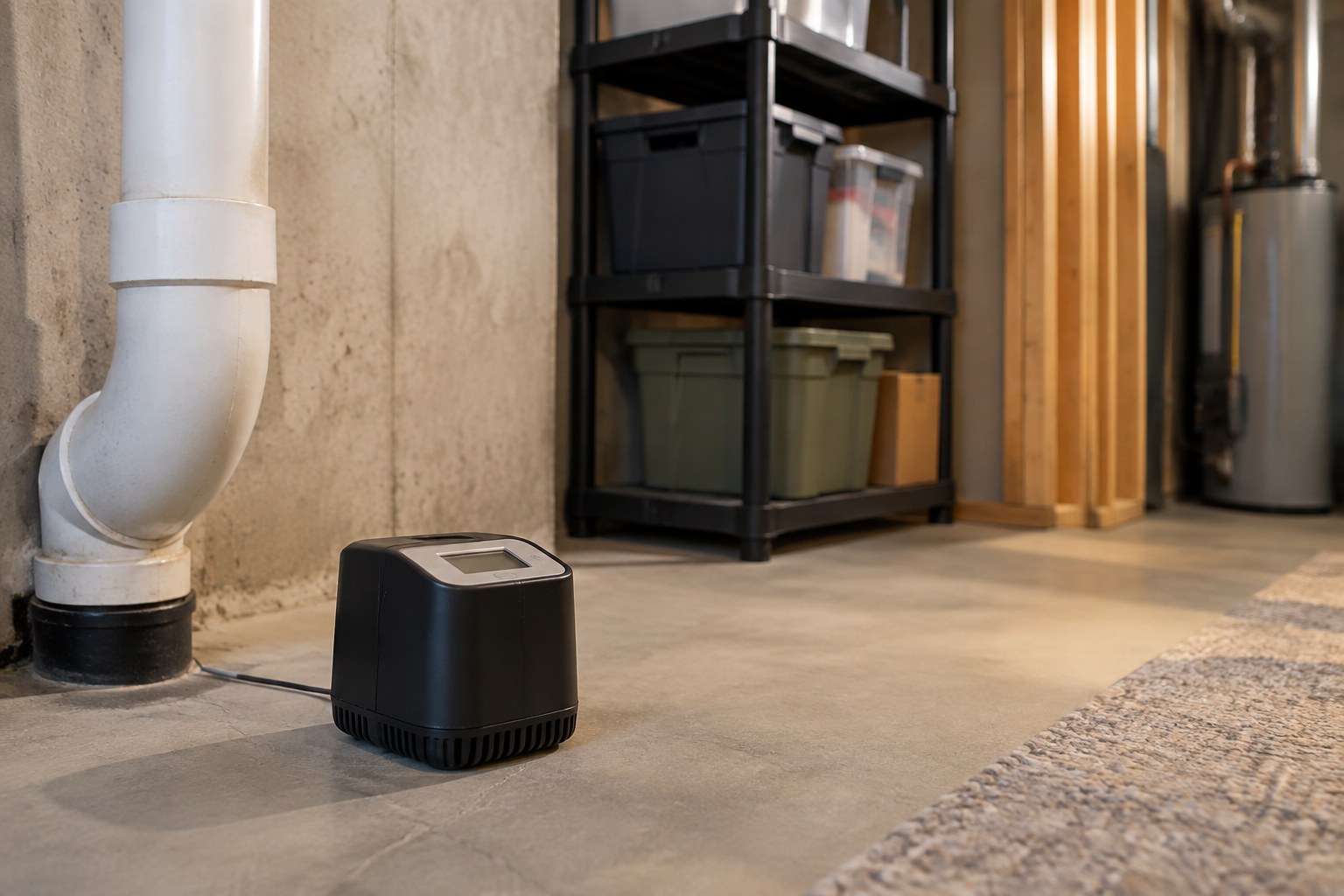
Professional radon testing typically involves placing a calibrated monitoring device in the lowest livable area of the home.
The device continuously measures radon concentrations over a specified testing period while recording environmental conditions that could affect the results.
For real estate transactions, a short-term test is commonly performed, often lasting approximately 48 hours.
During the testing period, homeowners are usually asked to maintain closed-house conditions, including:
Keeping exterior doors and windows closed
Limiting operation of whole-house fans
Maintaining normal HVAC operation
These conditions help ensure accurate and reliable test results.
What Happens If Elevated Radon Is Found?
If elevated radon levels are detected, mitigation is often straightforward and highly effective.
A certified radon mitigation contractor may install a system that typically includes:
PVC vent piping
A specialized radon fan
Sealing of certain foundation openings
Venting radon gas safely above the roofline
Many mitigation systems can reduce radon levels significantly and provide long-term protection.
Should Homeowners Test More Than Once?
Testing is recommended:
During a home purchase
After major renovations
After foundation repairs
Following mitigation system installation
Periodically throughout homeownership
Changes in soil conditions, weather patterns, and home ventilation can affect radon levels over time.
Radon Testing During a Home Inspection
A home inspection evaluates many visible and accessible components of a property. However, radon is not something that can be identified through a visual inspection alone.
Adding professional radon testing provides valuable information about an environmental condition that could affect both health and property value. For many buyers, it offers peace of mind and helps ensure informed decision-making before closing on a home.
Final Thoughts
Because radon is invisible and odorless, testing is the only way to know whether a home has elevated levels. The good news is that testing is simple, affordable, and can provide critical information about the indoor air quality of a property.
Whether you're buying a home, selling a home, or simply looking to protect your family, professional radon testing is an important step toward maintaining a healthier living environment.
If you are considering a home inspection, adding radon testing can provide an additional layer of protection and help identify a potentially serious issue before it becomes a long-term concern.


Comments
Post a Comment